Platform comparison
| Platform | YES odds | NO odds | Fee | KYC | Settlement | |
|---|---|---|---|---|---|---|
Polymarket KYC UK Pick polygram.ink |
11% | 89% | 0% (USDC on-chain) | No-KYC up to $1,500 | USDC, auto via UMA oracle | Open on Polymarket KYC UK → |
Polymarket polymarket.com |
11% | 89% | 0% | Geo-blocked in US/UK/EU | USDC, on-chain | Open on Polymarket KYC UK → |
Kalshi kalshi.com |
— | — | Up to 7% per trade | US-only, KYC required | USD | Open on Polymarket KYC UK → |
Betfair Exchange betfair.com |
— | — | 2-5% commission | Full KYC from first trade | GBP / EUR | Open on Polymarket KYC UK → |
Manifold Markets manifold.markets |
— | — | Play-money (mana) | None — play-money | Mana (no cash-out) | Open on Polymarket KYC UK → |
Live odds for Polymarket-based markets come from the Polygon order book. Non-Polymarket venues show attributes only; clicking any row opens the market on Polymarket KYC UK.
Active sub-markets
Market context
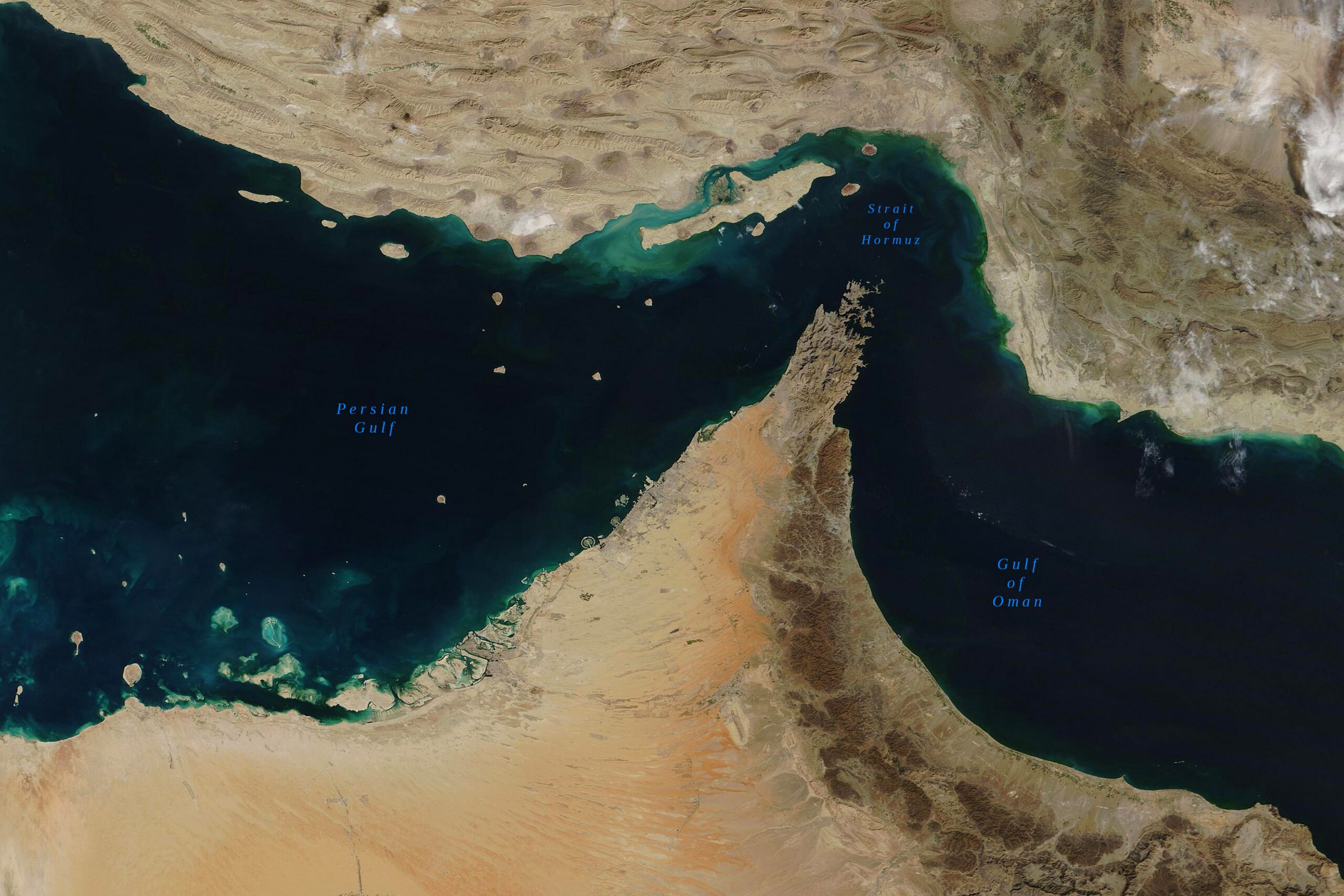
The Strait of Hormuz remains one of the world's most critical maritime chokepoints, with roughly one-fifth of global petroleum passing through its waters daily. This market tests whether daily ship transit volumes—measured by IMF Portwatch arrivals across container, tanker, bulk, and general cargo categories—will reach a specified threshold on any single day before the end of May 2026. The 13% implied probability reflects the specificity of the trigger: hitting an exact daily count is a narrower proposition than asking whether transits will occur at all, which they reliably do.
Historical transit data shows Hormuz typically processes 2,000–2,500 vessel transits annually, averaging roughly 5–7 daily arrivals depending on seasonal demand and geopolitical disruption. The 2022 spike in shipping costs and rerouting patterns following Russia's invasion of Ukraine demonstrated how quickly alternative routes can absorb volume, though Hormuz remained the primary corridor. More recently, Houthi attacks on shipping in the Red Sea (2023–2024) temporarily elevated Hormuz traffic as vessels avoided the Bab el-Mandeb, though the effect proved temporary as insurance and security measures stabilised.
Traders should monitor OPEC production announcements, US sanctions policy toward Iran, and any escalation in regional naval activity, all of which influence tanker scheduling and thus daily arrival counts. IMF Portwatch publishes data with a lag of several days; confirmation of a qualifying transit day may not appear immediately. Currency fluctuations and global recession signals also affect shipping demand indirectly. The market's accessibility under UK and EU frameworks (including German GlüStV provisions for derivatives trading) and US CFTC reach depends on the trader's jurisdiction; no-KYC access up to £1,200 (approximately $1,500) applies to certain prediction market platforms operating under specific regulatory carve-outs, though this market's settlement mechanics and underlying asset classification should be verified against local rules before trading.
Methodology
This page reviews Will 2026 ships transit the Strait of Hormuz on any day by May 31? across five venues. We show live odds for Polymarket-based markets (sourced from the Polygon order book); for other venues we list platform attributes, since the comparable contracts are not exposed via a public API on every venue. Every CTA points at Polymarket KYC UK — the application we operate, where you trade directly against the Polymarket order book at 0% fees.
Resolution & payout
Polymarket-based markets settle through the UMA Optimistic Oracle on Polygon. A proposer submits the outcome, a two-hour challenge window opens, and unchallenged proposals finalise the resolution. Payouts settle automatically in USDC the moment the result is final — no bookmaker, no delay.
Kalshi-based markets settle in USD via the CFTC-regulated clearinghouse. Betfair Exchange settles in GBP/EUR net of commission. Manifold is play-money and does not pay out real funds.
FAQ
- Where can I trade this market with the lowest fees?
- On Polymarket KYC UK, which mirrors the Polymarket order book at 0% fees. Kalshi charges up to 7% per trade; Betfair Exchange takes 2-5% commission on net winnings.
- How does resolution work?
- Through the UMA Optimistic Oracle on Polygon: a proposer submits the outcome, a two-hour challenge window opens, and USDC payouts settle automatically once the result is final.
- What's the difference between YES and NO shares?
- A YES share pays $1.00 if the event happens, $0 otherwise. A NO share pays $1.00 if the event doesn't happen. The market price between 0¢ and 100¢ is the implied probability.
- What does it cost to trade on Polymarket KYC UK?
- Zero. Polymarket KYC UK routes every order to the live Polymarket order book; the only cost is the Polygon network fee, typically under $0.01 per transaction.
- How reliable are the quoted odds?
- The YES/NO percentages are the live mid-prices of the Polymarket order book. On deep markets they move every few seconds; on thinner ones you'll see short plateaus.
%22%2F%3E%3Cpath%20d%3D%22M%206%2066%20A%2026%2026%200%200%201%2058%2066%22%20fill%3D%22%23E6B98D%22%20opacity%3D%220.9%22%2F%3E%3Ccircle%20cx%3D%2232%22%20cy%3D%2226%22%20r%3D%2222%22%20fill%3D%22%23F5CBA7%22%2F%3E%3Crect%20x%3D%2214%22%20y%3D%224%22%20width%3D%2236%22%20height%3D%228%22%20rx%3D%224%22%20fill%3D%22%237c3aed%22%2F%3E%3C%2Fsvg%3E) and
and%22%2F%3E%3Cpath%20d%3D%22M%206%2066%20A%2026%2026%200%200%201%2058%2066%22%20fill%3D%22%23E6B98D%22%20opacity%3D%220.9%22%2F%3E%3Ccircle%20cx%3D%2232%22%20cy%3D%2226%22%20r%3D%2222%22%20fill%3D%22%23F5CBA7%22%2F%3E%3Cpath%20d%3D%22M%2010%2018%20Q%2016%204%2026%2010%20Q%2020%202%2032%206%20Q%2044%202%2038%2010%20Q%2048%204%2054%2018%22%20stroke%3D%22%237c3aed%22%20stroke-width%3D%224%22%20fill%3D%22none%22%20stroke-linecap%3D%22round%22%2F%3E%3C%2Fsvg%3E)
Trade Will 2026 ships transit the Strait of Hormuz on any … on Polymarket KYC UK
Live order book, 0% fees, USDC settlement in seconds.
Trade on Polymarket KYC UK →