Platform comparison
| Platform | YES odds | NO odds | Fee | KYC | Settlement | |
|---|---|---|---|---|---|---|
Polymarket KYC UK Pick polygram.ink |
1% | 99% | 0% (USDC on-chain) | No-KYC up to $1,500 | USDC, auto via UMA oracle | Open on Polymarket KYC UK → |
Polymarket polymarket.com |
1% | 99% | 0% | Geo-blocked in US/UK/EU | USDC, on-chain | Open on Polymarket KYC UK → |
Kalshi kalshi.com |
— | — | Up to 7% per trade | US-only, KYC required | USD | Open on Polymarket KYC UK → |
Betfair Exchange betfair.com |
— | — | 2-5% commission | Full KYC from first trade | GBP / EUR | Open on Polymarket KYC UK → |
Manifold Markets manifold.markets |
— | — | Play-money (mana) | None — play-money | Mana (no cash-out) | Open on Polymarket KYC UK → |
Live odds for Polymarket-based markets come from the Polygon order book. Non-Polymarket venues show attributes only; clicking any row opens the market on Polymarket KYC UK.
Active sub-markets
Market context
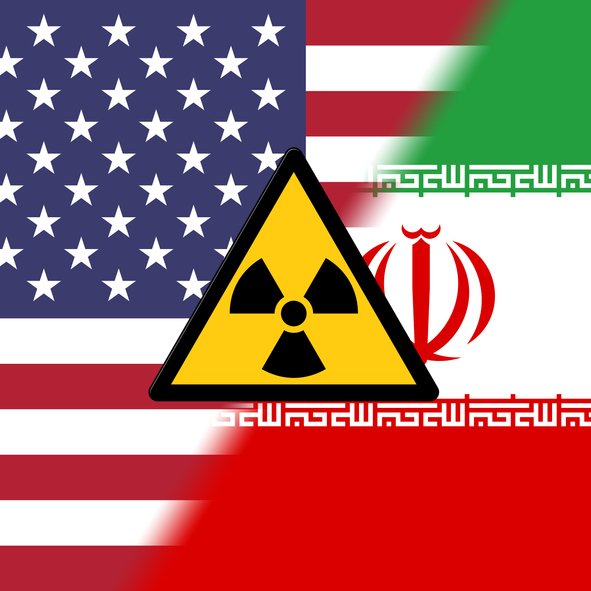
The real-world event is a June 2026 US–Iran diplomatic framework that launched a 60-day negotiating period over Iran’s nuclear programme, sanctions relief, and related regional issues, but the market needs a written instrument mutually signed or formally adopted by the deadline. Reuters reported that the draft included oil-sanctions waivers, nuclear limits and asset-release provisions, while AP described the arrangement as a provisional pact with a 60-day timeline rather than a final settlement.[4][1]
The 1% crowd-implied price is consistent with a market that is still waiting for the hard proof event: a signed memorandum, protocol or equivalent written adoption before 2026-08-31. Historical comparables in this file are more about framework agreements than completed accords; CSIS noted the MOU was slated for Geneva signing and that key economic terms remained unclear, which matters because markets often reprice only when signatures, publication or formal adoption are visible.[3] Under Germany’s GlüStV, accessibility depends on local operator compliance and player protections, while the US CFTC reach is relevant because outcomes tied to geopolitical events can still sit in a US-regulated derivatives environment depending on platform structure. “No-KYC up to $1,500” typically means lighter identity checks may apply only below that threshold, so small-stake access can be easier but not anonymous, and higher activity can trigger full verification.
For traders, the main catalysts are the next scheduled negotiation round, any Geneva-style signing announcement, and any change in the ceasefire or sanctions timetable, because the deal’s own terms link finalisation to progress on nuclear talks and regional de-escalation.[3][4] Reuters also reported a 60-day window for deliberation, which leaves the market sensitive to whether the parties publish a definitive text, extend talks, or let interim arrangements drift without a qualifying signed instrument.[4] If later reporting confirms only technical talks, delayed ceremonies, or unilateral statements, the probability would stay anchored near current levels rather than move materially.
Methodology
We track US-Iran Final Nuclear Deal by…? on the five venues with material liquidity for prediction markets. Live odds come from the Polymarket Polygon order book — the only source that ships real-time data under an open licence. For Kalshi, Betfair and Manifold we list platform attributes (fee, KYC, settlement, payment) instead of fabricated odds, because their APIs use non-comparable contract definitions.
Resolution & payout
Polymarket-based markets settle through the UMA Optimistic Oracle on Polygon. A proposer submits the outcome, a two-hour challenge window opens, and unchallenged proposals finalise the resolution. Payouts settle automatically in USDC the moment the result is final — no bookmaker, no delay.
Kalshi-based markets settle in USD via the CFTC-regulated clearinghouse. Betfair Exchange settles in GBP/EUR net of commission. Manifold is play-money and does not pay out real funds.
FAQ
- Where can I trade this market with the lowest fees?
- On Polymarket KYC UK, which mirrors the Polymarket order book at 0% fees. Kalshi charges up to 7% per trade; Betfair Exchange takes 2-5% commission on net winnings.
- How does resolution work?
- Through the UMA Optimistic Oracle on Polygon: a proposer submits the outcome, a two-hour challenge window opens, and USDC payouts settle automatically once the result is final.
- What's the difference between YES and NO shares?
- A YES share pays $1.00 if the event happens, $0 otherwise. A NO share pays $1.00 if the event doesn't happen. The market price between 0¢ and 100¢ is the implied probability.
- What does it cost to trade on Polymarket KYC UK?
- Zero. Polymarket KYC UK routes every order to the live Polymarket order book; the only cost is the Polygon network fee, typically under $0.01 per transaction.
- How reliable are the quoted odds?
- The YES/NO percentages are the live mid-prices of the Polymarket order book. On deep markets they move every few seconds; on thinner ones you'll see short plateaus.
%22%2F%3E%3Cpath%20d%3D%22M%206%2066%20A%2026%2026%200%200%201%2058%2066%22%20fill%3D%22%23E6B98D%22%20opacity%3D%220.9%22%2F%3E%3Ccircle%20cx%3D%2232%22%20cy%3D%2226%22%20r%3D%2222%22%20fill%3D%22%23F5CBA7%22%2F%3E%3Crect%20x%3D%2214%22%20y%3D%224%22%20width%3D%2236%22%20height%3D%228%22%20rx%3D%224%22%20fill%3D%22%237c3aed%22%2F%3E%3C%2Fsvg%3E) and
and%22%2F%3E%3Cpath%20d%3D%22M%206%2066%20A%2026%2026%200%200%201%2058%2066%22%20fill%3D%22%23E6B98D%22%20opacity%3D%220.9%22%2F%3E%3Ccircle%20cx%3D%2232%22%20cy%3D%2226%22%20r%3D%2222%22%20fill%3D%22%23F5CBA7%22%2F%3E%3Cpath%20d%3D%22M%2010%2018%20Q%2016%204%2026%2010%20Q%2020%202%2032%206%20Q%2044%202%2038%2010%20Q%2048%204%2054%2018%22%20stroke%3D%22%237c3aed%22%20stroke-width%3D%224%22%20fill%3D%22none%22%20stroke-linecap%3D%22round%22%2F%3E%3C%2Fsvg%3E)
Trade US-Iran Final Nuclear Deal by…? on Polymarket KYC UK
Live order book, 0% fees, USDC settlement in seconds.
Trade on Polymarket KYC UK →